

VOL.14
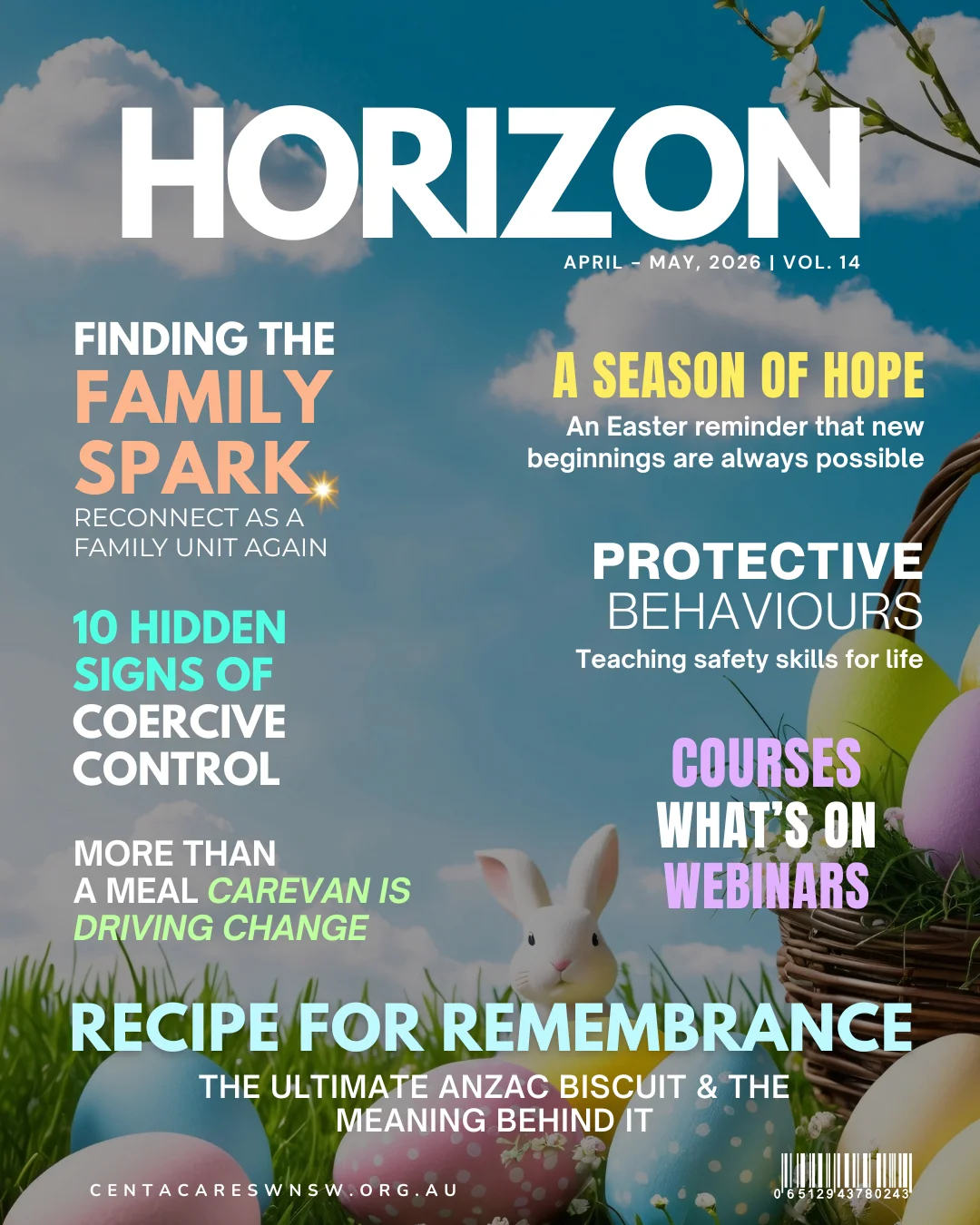
This issue brings together stories that matter to our community. From the hope and renewal of Easter to practical ways to feel safe, supported and connected.
Explore Protective Behaviours, the hidden signs of coercive control, and simple ways to reconnect as a family.
We also share a meaningful ANZAC story and recipe, plus the inspiring work of Carevan. Don’t miss our upcoming courses and free webinars this April and May.
Table of contents
Hope. Renewal. Community
An Easter message from Most Rev. Mark Edwards OMI
3
Protective Behaviours
Building safety skills for life
4
Coercive Control
10 hidden signs you shouldn't ignore
5
The Family Spark
Reconnect as a family unit again
6
A Recipe For Remembrance
The ultimate ANZAC biscuit & the meaning behind it
7
More Than a Meal
How Carevan is driving hope within our community
8
Learn With Us
April & May courses & free webinars
9
Centacare recognises, respects and values Aboriginal and Torres Strait Islander peoples as the traditional owners and custodians of the land. We honour their cultural, spiritual and emotional connection to their traditional country.

A Season of Hope
Easter reminds us that new beginnings are always possible.
A message from Most Rev. Mark Edwards OMI
In the spirit of Easter, Centacare’s work reflects a promise of new beginnings: helping people find hope in difficult moments, fostering wellbeing in families and walking alongside individuals as they rebuild and flourish. This commitment to renewal is lived out through a broad range of professional support from counselling and mental health services to school wellbeing programs, family support, settlement assistance and legal advice.
What began decades ago as a vision to extend care beyond the walls of the Church has grown into vital services that empower people to thrive, recover, build resilience and strengthen relationships. Through times of challenge and change, Centacare’s dedicated team has stood firmly as a listening presence to those in need.
As Centacare South West NSW marks 35 years of service to the region, we honour over three decades of dedicated support. As we rejoice in this season of resurrection, we give thanks for their enduring commitment to community, dignity and compassion - they are truly here for you.
“An enduring commitment to community, dignity, and compassion - here for you.”
Protective Behaviours
Building Safety for Life

Helping children feel safe, confident and able to speak up
Every child deserves to feel safe in their body and in their world.
Our Protective Behaviours Program helps children build the awareness and confidence to recognise when something doesn’t feel right and know what to do next. It is not about fear. It is about understanding, connection and feeling supported.
Through age-appropriate learning, children explore emotions, recognise early warning signs and begin to understand personal boundaries, respect and safety. They also learn how to seek help and identify trusted adults around them.
Children build skills across emotional awareness, communication, safety and self-advocacy. Skills they can carry with them for life.
“Knowing what feels safe and what doesn’t is a skill for life.”
Delivered in schools and early learning settings, this program supports safer, more confident communities.
We also tailor sessions for workplaces, local clubs and organisations.
Download the brochure to learn more
Download Information (PDF)

Coercive Control
10 Hidden Signs You Shouldn’t Ignore
When something feels off but you can’t quite explain it, it may be more than just a difficult relationship
Does it feel like you are constantly walking on eggshells? Perhaps you have a friend or family member who seems to be shrinking away from their usual self.
When we think of domestic violence, we often look for physical marks. But coercive control is different. It is a pattern of behaviour used to take away a person's independence and self-esteem. Because it is not always physical, it can be hard to name. You might even wonder if you are just being "too sensitive".
Certain behaviours can build over time and may not be obvious at first. Kate, one of our Multicultural DFV caseworkers has shared some often-missed signs of coercive control.
10 hidden signs to look out for:
- Always being watched
Checking or monitoring phone calls, messages or social media - Money or basic needs being limited
Restricting access to money, sleep or essentials - Threats used to keep someone from leaving
Threatening self-harm if a partner tries to leave - Being cut off from support
Isolating someone from friends or family - Jealousy used as a reason to restrict freedom
Limiting where someone goes or who they see - Intimidation in the home
Keeping weapons for “protection” or creating fear - Pressure around major life decisions
Pressuring someone to have children or use substances - Making someone feel dependent
Telling them they can only rely on their partner - Controlling relationships
Dictating who someone can speak to or spend time with - Using fear to maintain control
Hurting or intimidating children or pets
You don’t have to figure this out on your own
If you are worried about yourself or someone you care about, your concerns matter. Support can feel complex, but you don’t have to navigate it alone.
Whether you need support for yourself or advice on how to help a friend, our team is ready to listen.
Talk to us today
The Family Spark
Simple ways to reconnect when life feels a little too busy

Do you ever feel more like a taxi driver than a parent? Between school runs, work, and constant notifications, family life can start to feel like an urban jungle.
Everyone is moving in different directions, and you are doing your best to keep it all together. It is no wonder that the family spark can feel a little lost.
National Families Week (11–17 May) is a gentle reminder to pause. It’s a time to step out of the rush and reconnect. Coinciding with the UN International Day of Families on 15 May, it celebrates the many ways families show up for each other across Australia.
Connection does not need to be big or complicated.
It just needs intention.
Small moments can make a real difference:
- Sharing a laugh
- Putting devices away at dinner
- Spending 10 minutes of uninterrupted time together
These moments help children feel safe, seen, and valued.
Reconnect this May
If family life has started to feel more like juggling than connecting, you are not alone.
Our free Families Connect webinar on 12 May is available Australia-wide, making it easy for families anywhere to join in and reconnect.
What you’ll gain:
- Ways to find the laughter again
- Practical tools to strengthen your bond
- Confidence to support your family’s emotional wellbeing
Book your free spot and take a small step back towards connection.
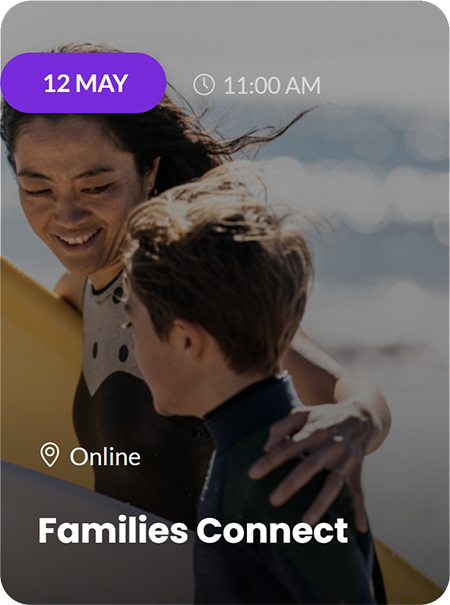
Book your free spot | Offered Australia-wide
Register NowInstant confirmation. no wait. Simply complete the online form to secure your spot.

A Recipe for Remembrance
The ultimate ANZAC biscuit and the meaning behind it
On April 25, communities across Australia will pause to remember the service and sacrifice of the men and women who have served in all wars, conflicts, and peacekeeping missions.
Whether you attend a dawn service, stand quietly at a march, or take a moment of silence at home, it is a shared act of reflection. It is also a reminder of the values that continue to shape us: courage, resilience, and mateship.
The Story Behind the Tin
Did you know that ANZAC biscuits have a history as hardy as the soldiers they were made for? During World War I, families sent these biscuits to loved ones overseas. Because they were made without eggs, they didn't spoil during the long journey by ship.
Simple, practical, and made with care, they became a tangible connection between home and the front line. Today, baking them is a quiet act of remembrance shared across generations.
“A simple recipe, shared across generations, becomes a quiet act of remembrance.”
Whether you attend a dawn service, stand quietly at a march, or take a moment of silence at home, it is a shared act of reflection. It is also a reminder of the values that continue to shape us: courage, resilience, and mateship.
The Story Behind the Tin
Did you know that ANZAC biscuits have a history as hardy as the soldiers they were made for? During World War I, families sent these biscuits to loved ones overseas. Because they were made without eggs, they didn't spoil during the long journey by ship.
Simple, practical, and made with care, they became a tangible connection between home and the front line. Today, baking them is a quiet act of remembrance shared across generations.
Ingredients
- 1 cup rolled oats (traditional oats deliver on texture)
- 1 cup plain flour
- 1 cup sugar
- 1 cup desiccated coconut
- Pinch of salt
- 125g butter
- 2 tbsp golden syrup
- 1 tsp bicarb soda
- 2 tbsp boiling water
Method
- Prep: Preheat your oven to 160°C and line two baking trays.
- Mix Dry: In a large bowl, whisk together the oats, flour, sugar, coconut, and salt.
- Melt: Combine the butter (see pro tip) and golden syrup in a small saucepan over medium heat until melted and smooth.
- Activate: Mix the bicarb soda with the boiling water in a small cup and immediately stir it into the butter mixture (it will froth!).
- Combine: Pour the wet ingredients into the dry mix and stir until well combined.
- Shape: Roll into tablespoon-sized balls and place on the trays. Flatten them slightly with a fork, leaving plenty of room for them to spread.
- Bake: Bake for 10–12 minutes for a chewy result, or 15 minutes if you prefer a classic crunch.
Pro Tip to Level-up the Flavour: For a deeper, nutty profile brown your butter first. Simmer the butter on low heat until it foams and turns a golden amber colour with a toasted aroma before adding your golden syrup.
However you mark ANZAC Day, it’s the small moments of reflection and connection that carry its meaning forward.
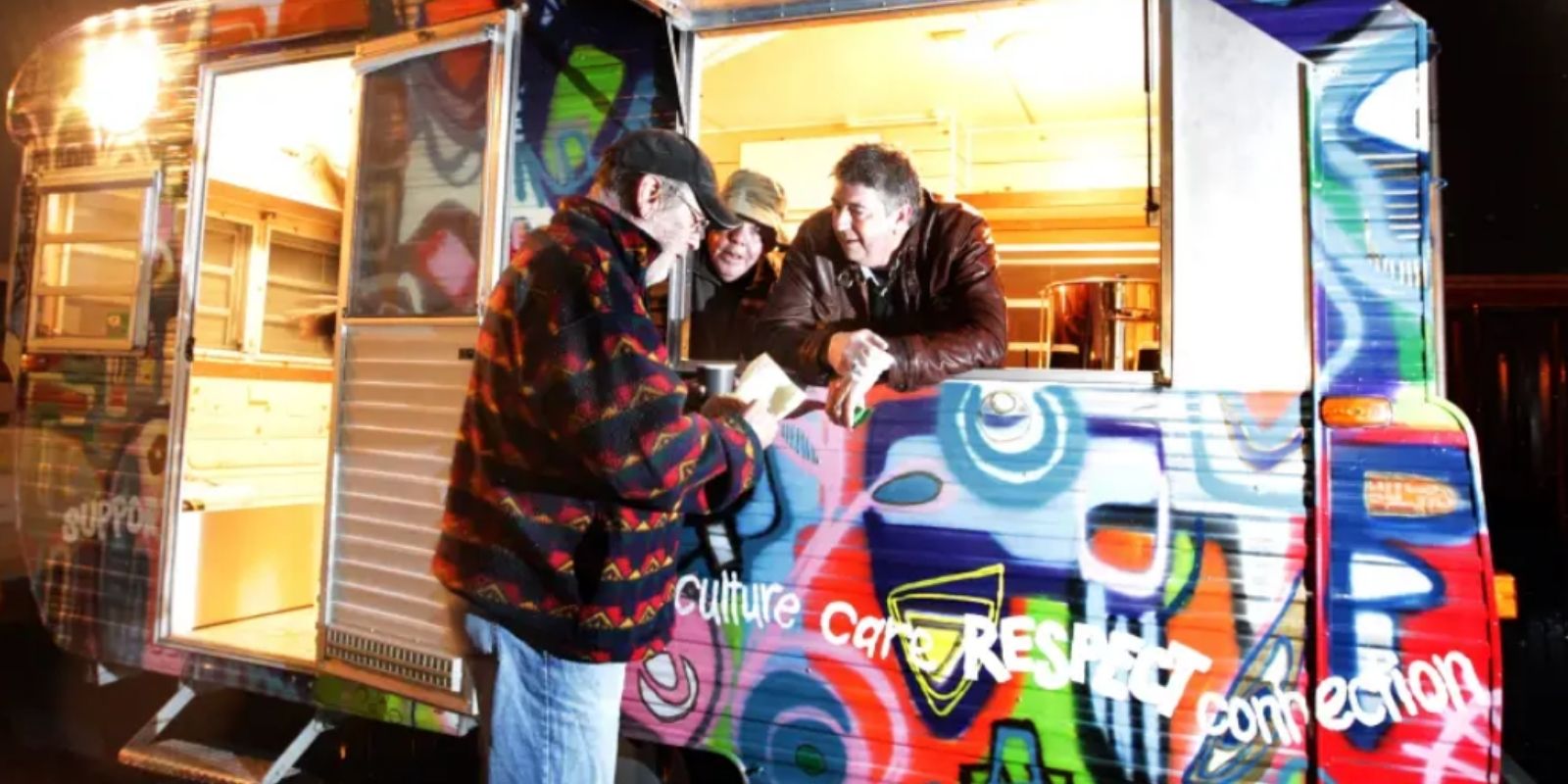
More Than a Meal: How Carevan is Driving Change in Our Community
Meals, connection, and dignity for people doing it tough
This issue, we’re shining a light on the work of the Carevan Foundation - a grassroots organisation making a real difference across our region.
“Each year we deliver more than 20,000 meals, including school lunches, to people experiencing homelessness, hardship, social isolation, or disadvantage across the Albury Wodonga community.”
If you’d like to learn more, support their work, or get involved, we encourage you to visit their website.
carevan.com.au
Learn with Us
What's on this April & May
Free Webinar (Available Australia-Wide)

Courses Coming Up
Parenting Skills
Bringing Up Great Kids
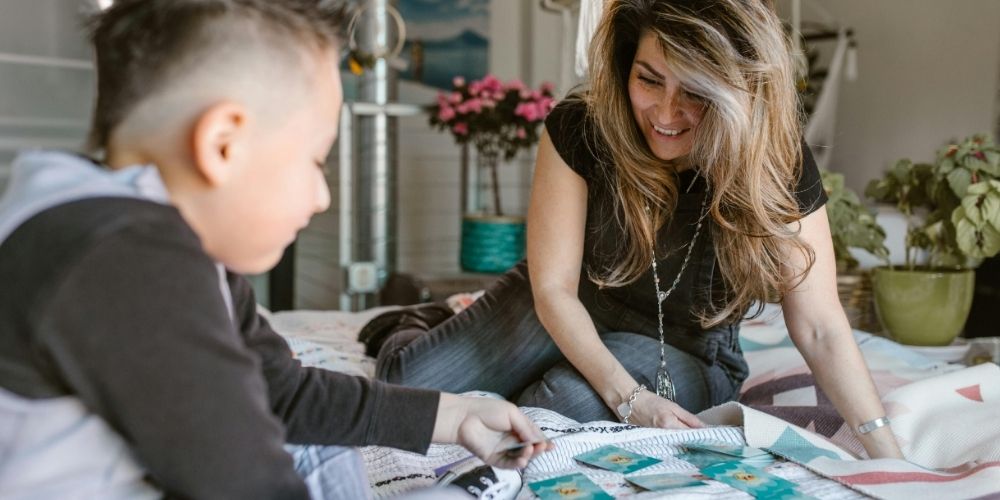
Bringing Up Great Kids is a free four-week parenting program focused on mindful parenting, stronger relationships and understanding children’s behaviour.

Behaviour & Emotions
Keeping Kids Calm
Learn practical strategies to support children experiencing anxiety, big emotions and challenging behaviour.

Relationships
Keeping Kids In Mind
Support your children through separation by reducing conflict and focusing on their emotional needs and wellbeing.

Family Support
Supporting Children Through Trauma
Understand how trauma impacts children and learn ways to support healing, safety and emotional development.