

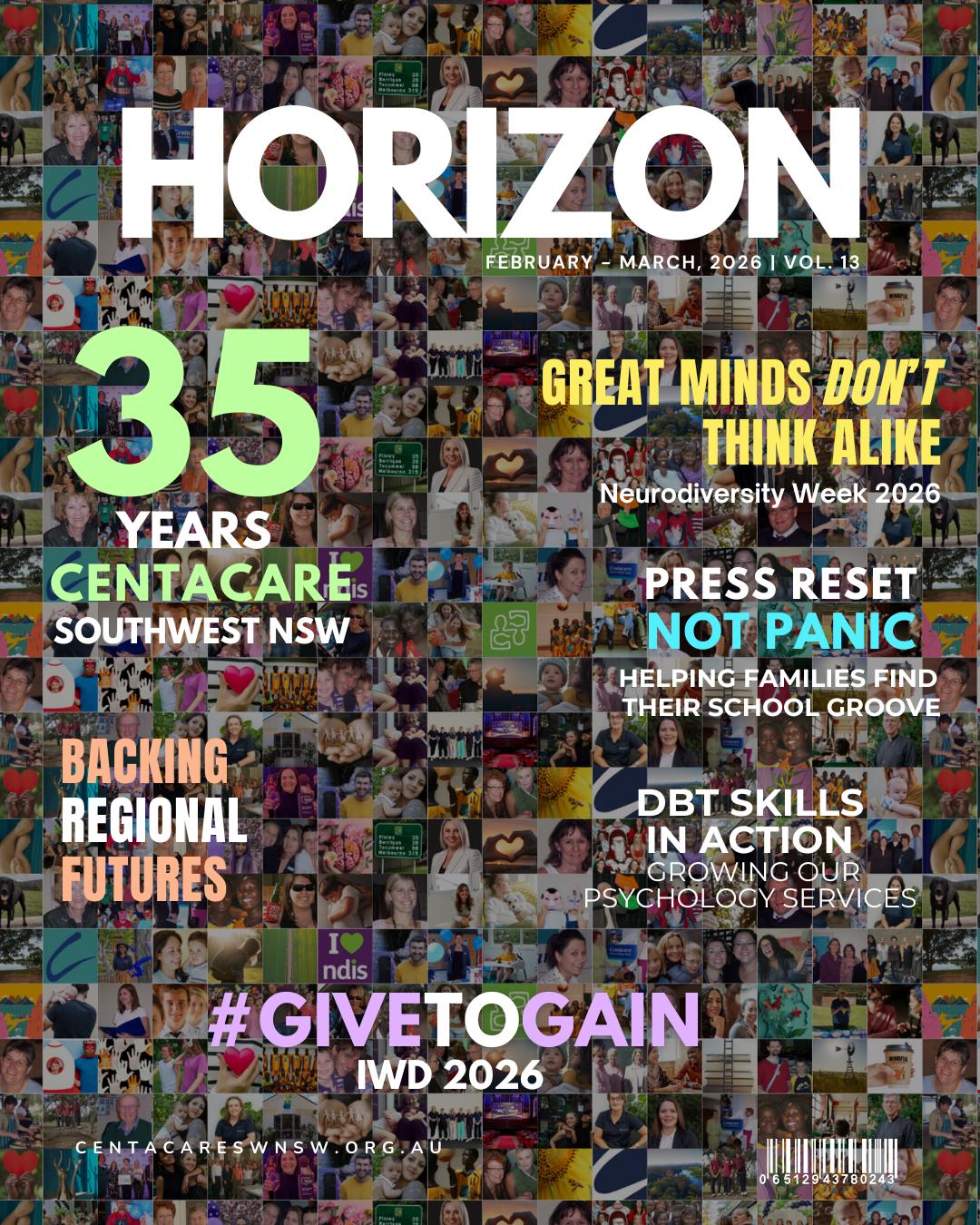
VOL.13
This edition is a little special. As we step into a new year, we are also celebrating 35 years of Centacare Southwest NSW walking alongside our community.
From families navigating change, to children heading back to school, to adults building stronger emotional wellbeing, this issue reflects both where we began and where we are going.
Volume 13 is a celebration of care, growth and the people who make wellbeing possible, every day, across our region.
Table of contents
35 Years of Wellbeing for All
From a small beginning to a lasting community legacy
3
Press Reset, Not Panic
Tips to help your kids get into the school groove again
4
Great minds don't think alike
Celebrating Neurodiversity Week 2026
5
Give to Gain
When women thrive, we all rise
6
Backing Regional Futures
Removing barriers to education, together
7
DBT Skills in Action
What DBT is and how it is expanding our psychology services for the community
8
Centacare recognises, respects and values Aboriginal and Torres Strait Islander peoples as the traditional owners and custodians of the land. We honour their cultural, spiritual and emotional connection to their traditional country.

35 Years of Wellbeing for All
Since 1991, Centacare South West NSW has been walking alongside our communities, responding to change, strengthening connections and supporting wellbeing at every stage of life.

Humble beginnings...
What began in 1991 as a small, locally driven response to unmet needs in regional NSW has grown into a trusted network of care spanning Wagga Wagga, Griffith, Albury and their surrounds. Over the years, our services have evolved as communities have changed, always shaped by listening, responding and showing up where it matters most.
Behind those early beginnings was a small but determined group who recognised the need for action. Father John Shanahan, Judy Dempsey and Kerry Brettell formed the founding committee, soon joined by Sister Margaret Hart as one of Centacare’s first staff members. Together, they shared a vision grounded in compassion, justice and practical care for people experiencing disadvantage across our region.
“Our work has always been about showing up, listening and walking alongside people.”
Responding where it matters most
Over the past 35 years, we have continued to respond where it matters most, providing counselling and psychology, family and relationship support, school wellbeing programs, NDIS, education and youth mental health and mediation support.
Each service has been shaped by listening closely to the people we serve and responding with care, respect and practical support.
Strong communities, stronger connections
Today, with nearly 60 staff across multiple locations throughout the Wagga diocese, we remain deeply connected to the communities we support. Strong partnerships with schools, health providers, local businesses and community organisations ensure care is delivered collaboratively, not in isolation.
Our purpose, unchanged
While much has changed since 1991, our purpose remains the same. We continue to believe in wellbeing for all and in walking alongside our communities through every stage of life.
For the full story and to explore our 35 year timeline, visit our dedicated anniversary page:
35 Years of Wellbeing
Press Reset, Not Panic!
Tips to help your kids get into the school groove again

The school holidays were long, sunny and blissfully unstructured. And now… alarms, lunchboxes and "do I have to's?" are back. If your house feels a little louder, grumpier or screen-ier than usual, you are not alone.
After a big break, children’s brains need time to recalibrate. Screens give quick hits of excitement, so when they switch off, frustration and boredom can rush in. That does not mean you have done anything wrong. It simply means a reset is underway.
The good news? Balance comes back with calm, consistency and a bit of patience. And remember: A gentle reset beats a hard stop every time. You’ve got this!
8 helpful reset tips
1. Ease back into it
Reintroduce screen time and limits gradually.
2. Visual Cues
Use visual schedules or timers so children know what to expect.
3. Give notice
Give a five to ten minute warning before screentime ends.
4. Screen-free Starts
Keep mornings and bedrooms screen free.
5. Offline Fun
Pair less screen time with fun offline options.
6. Tech-free Family Routines
Create tech-free family routines (mealtimes, car trips, bedtime).
7. Stay Steady
Stay calm and consistent. Children take their cues from adults.
8. Expect Pushback
This is normal. It usually settles.
“This adjustment phase is normal. Staying calm and consistent helps children feel safe while their nervous system resets.”
Want more support, tips and practical strategies for parents ?
Check Out Our Parent Support page
Great minds don’t think alike
Neurodiversity Celebration Week 2026

Neurodiversity Celebration Week is a time to remind ourselves not all minds work the same way, and that diversity is something to value.
Neurodiversity recognises that differences in brain function and neurotypes are a natural and important part of being human. Neurotypes such as autism, ADHD and dyslexia, and conditions like dyspraxia or Tourette’s syndrome, shape how children process information, communicate and interact with the world.
This week helps challenge stereotypes and shifts the focus from difficulties to strengths. It encourages families, schools and communities to recognise creativity, insight and unique perspectives, and to create environments where children feel understood and respected.
"Great minds don’t think alike! When we celebrate differences, children feel seen, valued and confident to be themselves.”
Getting behind a great initiative
Centacare SouthWest NSW shares the values behind this week and supports families in ways that recognise children’s strengths. Our work focuses on inclusion, connection and confidence. If you would like to know more, drop us an email. We would love to hear from you.
Find out more about how to get involved and join the celebration
neurodiversityweek.com
#GiveToGain: When women thrive, we all rise
International Women’s Day 2026
This March 8, International Women’s Day 2026 invites us to reflect on a powerful idea: when we give, we gain. This year’s theme, Give to Gain, celebrates generosity, reciprocity and collective progress.
We asked three of our organisation's leaders what Give to Gain means to them:
[rev_slider alias="give-to-gain-1"][/rev_slider]
Their reflections shared a common truth:
- Giving trust, encouragement and opportunity builds confidence and leadership
- Supporting women creates stronger teams, families and communities
- Investing in wellbeing and equity leads to lasting impact
This International Women’s Day (March 8), we invite you to reflect on what you can give to help women thrive.
Learn more about the Give to Gain campaign via the International Women’s Day website.
internationalwomensday.com
Backing Regional Futures
Removing barriers to education, together

We believe supporting regional communities means helping students access education, even when the odds are stacked against them.
Across Australia, many university students experience significant financial hardship, with regional students often facing added pressures such as distance from campus, rising living costs and the impacts of drought, fire and flood.
Did you know?
Through the Charles Sturt University Foundation Trust, more than A$4 million in scholarships and grants are awarded each year to help students overcome these challenges and stay engaged in their studies.
How we help supporting our future
As a proud partner, Centacare Southwest NSW offers $5,000 scholarships to psychology and human services students from Griffith and surrounding areas. By easing financial stress, we help students complete their degrees and build careers that strengthen mental health and wellbeing across our region.
Applications close February 4 - If you are studying and passionate about supporting others, we encourage you to apply.
Apply Now

DBT Skills in Action
What DBT is and how it is expanding our psychology services for the community
We are pleased to share that our psychologists have completed specialist training in DBT (Dialectical Behaviour Therapy). This strengthens our psychology services and expands how we support children and adults across our community.
What is DBT?
DBT is a practical, skills based approach that supports people experiencing intense emotions, impulsive behaviours, self-harm, conflict or difficulty managing relationships. It focuses on building everyday skills in mindfulness, distress tolerance, emotion regulation and communication.
For adolescents and families, DBT also includes Walking the Middle Path, which helps reduce conflict, improve understanding and support calmer family relationships.
"DBT gives people practical tools they can use in everyday life, especially during challenging moments.”
If you would like to know more about DBT, or other psychology therapy we offer, visit our Psychology page on this website or speak with our team.
Explore our Psychology Services